
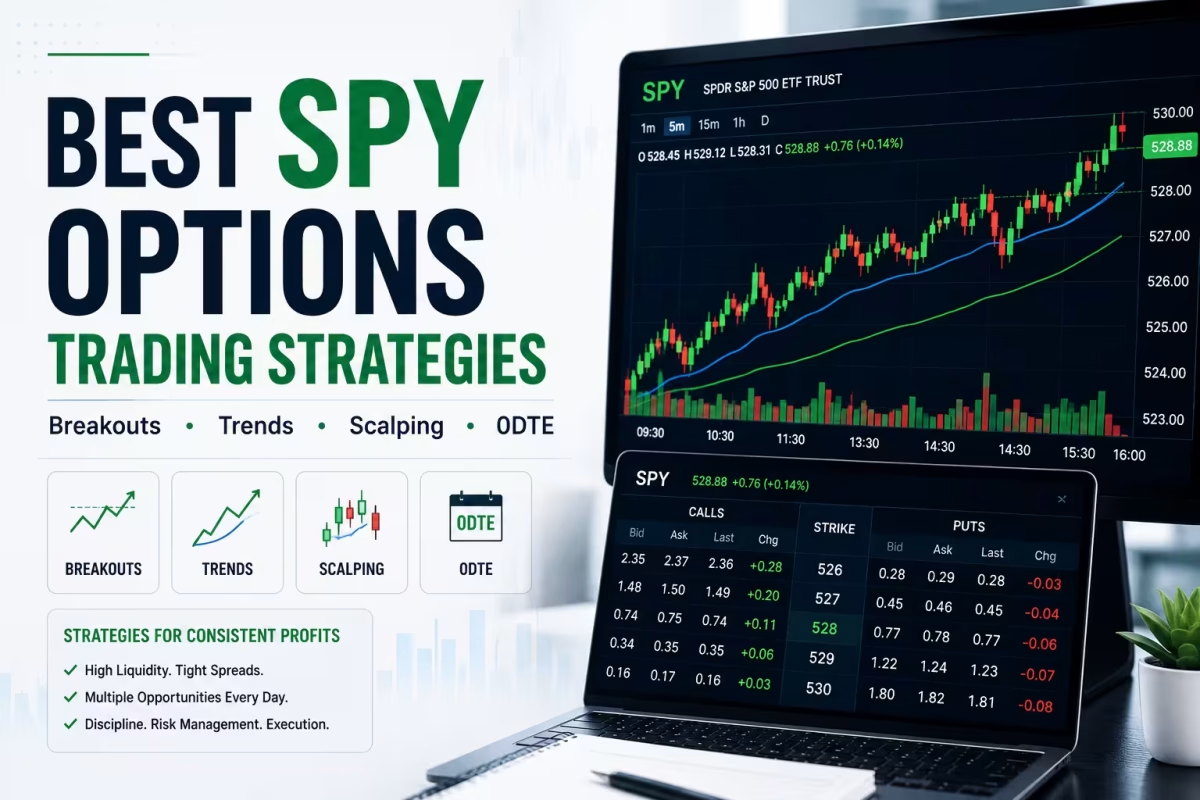
SPY options trading has become one of the most popular ways traders participate in the U.S. stock market. From beginner traders to experienced professionals, many prefer SPY options because of their liquidity, tight spreads, and consistent price movement during market hours.
Whether your goal is intraday trading, momentum trading, or short-term income opportunities, understanding the right SPY options trading strategies can help improve discipline, risk management, and execution.
In this guide, we’ll cover some of the best SPY options trading strategies, how they work, and how traders use them in real market conditions.
What Are SPY Options?
SPY options are options contracts based on the SPDR S&P 500 ETF (SPY), one of the most actively traded ETFs in the world. Since SPY tracks the S&P 500 Index, traders use SPY options to gain exposure to the broader U.S. stock market.
SPY options are popular because they offer:
- High daily trading volume
- Tight bid-ask spreads
- Multiple expiration dates
- Strong liquidity
- Reliable intraday price movement
These characteristics make SPY options suitable for both beginners and active day traders.
Why Traders Prefer SPY Options?
Before learning strategies, it’s important to understand why SPY options trading is so widely used.
1. High Liquidity
SPY options have some of the highest trading volumes in the options market. High liquidity helps traders enter and exit positions more efficiently.
2. Tight Spreads
Because of heavy trading activity, SPY options generally have tight bid-ask spreads, which can reduce trading costs.
3. Consistent Volatility
SPY moves consistently during U.S. market hours, making it attractive for momentum and intraday traders.
4. Multiple Trading Opportunities
SPY supports:
- Intraday trading
- Swing trading
- 0DTE trading
- Breakout setups
- Hedging strategies
Best SPY Options Trading Strategies
Below are some of the most commonly used SPY options trading strategies for active traders.
1. Intraday SPY Options Trading Strategy
Intraday trading involves opening and closing positions within the same trading day.
Many traders use SPY options for intraday setups because SPY reacts quickly to:
- Market sentiment
- Economic news
- Volume spikes
- Federal Reserve announcements
Common Intraday Setup
Traders often look for:
- Breakouts above resistance
- Breakdowns below support
- VWAP confirmation
- Strong volume expansion
Example:
If SPY breaks above a key resistance level with strong volume and bullish momentum, traders may enter call options with a defined stop-loss.
Important Intraday Rules
- Avoid overtrading
- Trade only during high-volume sessions
- Use strict stop-loss levels
- Focus on risk management
2. 0DTE SPY Options Strategy
0DTE stands for “Zero Days to Expiration.” These are options contracts that expire on the same day they are traded.
0DTE SPY options have become extremely popular because they offer:
- Fast price movement
- Lower premium costs
- Multiple intraday opportunities
However, they also carry high risk because option premiums decay rapidly.
How Traders Use 0DTE SPY Options?
Many traders utilize:
- Momentum breakouts
- Scalping strategies
- News-based volatility setups
- Opening range breakouts
Risk Management Is Critical
Since 0DTE contracts move aggressively:
- Position sizing matters
- Emotional trading should be avoided
- Traders should define exits before entry
Because of these factors, 0DTE trading is generally better suited for experienced traders.
3. SPY Breakout Trading Strategy
Breakout trading is one of the most commonly used SPY options strategies.
The goal is to identify key levels where SPY may move aggressively after breaking through support or resistance.
What Traders Watch?
Common breakout signals include:
- Volume expansion
- Price consolidation
- VWAP alignment
- Momentum confirmation
Bullish Breakout Example
A trader may buy SPY call options if:
- SPY breaks above resistance
- Volume increases significantly
- Market momentum remains bullish
Bearish Breakout Example
A trader may buy put options if:
- SPY breaks below support
- Selling pressure increases
- Market breadth weakens
4. Trend-Following SPY Strategy
Trend-following strategies focus on trading in the direction of the overall market trend.
Instead of trying to predict reversals, traders aim to ride existing momentum.
Common Trend Indicators
Many SPY traders use:
- Moving averages
- VWAP
- Trendlines
- Higher highs and higher lows
Why Trend Trading Works?
SPY often develops strong directional trends during:
- Major Economic events
- Earnings seasons
- Federal Reserve announcements
- High-volume trading sessions
Following established trends may help traders avoid unnecessary countertrend trades.
5. SPY Options Scalping Strategy
Scalping involves taking multiple small trades throughout the trading session to capture micro-movements.
SPY options are commonly used for scalping because of:
- Quick price movement
- Strong liquidity
- Active intraday volatility
Scalping Focus Areas
Scalpers often trade:
- Opening range breakouts
- Quick momentum shifts
- VWAP bounces
- Short-term support and resistance reactions
Important Scalping Tips
- Use fast execution
- Keep losses small
- Avoid emotional decisions
- Stick to predefined setups
Scalping requires discipline and fast decision-making.
Risk Management for SPY Options Trading
No strategy works consistently without proper risk management.
Many traders focus solely on entries while completely ignoring position sizing and risk control.
Key Risk Management Rules
1. Use Defined Stop-Losses
Always know your maximum acceptable loss before entering a trade.
2. Avoid Oversized Positions
Risking too much capital on one trade can damage long-term consistency.
3. Focus on Risk-to-Reward Ratio
Many successful traders prefer setups where potential reward outweighs risk.
4. Avoid Emotional Trading
Revenge trading and impulsive decisions often lead to poor execution.
5. Trade High-Probability Setups Only
Patience is important in SPY options trading.
Common Mistakes SPY Traders Should Avoid?
Even experienced traders make mistakes. Some common issues include:
Overtrading
Taking too many trades reduces discipline and spikes emotional decision-making.
Ignoring Market Conditions
Volatility shifts and news events can dramatically impact SPY’s price movement.
Trading Without a Plan
Every trade should include:
- A clear entry
- Stop-loss
- Profit target
- Calculated position size
Chasing Trades
Entering a position late after a major move has already occurred increases your risk significantly.
How MySpyOptions Helps SPY Traders?
MySpyOptions is a SPY & QQQ options trading advisory and mentorship service focused on helping traders improve decision-making, risk management, and market execution.
With 15+ years of market experience, the advisory focuses on:
- Real-time SPY options alerts
- Live market guidance
- Structured options trading training
- Risk-managed trading approaches
- SPY and QQQ focused strategies
Rather than promoting emotional or hype-driven trading, MySpyOptions emphasizes disciplined execution, market structure, and defined-risk setups.
FAQ’s
-
What are SPY options?
SPY options are options contracts based on the SPDR S&P 500 ETF (SPY), allowing traders to speculate on the movement of the S&P 500 Index.
-
Are SPY options good for beginners?
Many beginners prefer SPY options because of their deep liquidity and consistent market activity. However, proper education and risk management are important before starting.
-
What is the best SPY options trading strategy?
There is no single best strategy. Common approaches include:
- Intraday trading
- Breakout trading
- Trend-following
- 0DTE trading
- Scalping
The best strategy depends on a trader’s experience, risk tolerance, and current market conditions.
-
What is 0DTE SPY trading?
0DTE refers to options contracts expiring on the same day. These trades are highly active and involve rapid price action.
-
Why do traders prefer SPY over individual stocks?
SPY offers:
- High liquidity
- Tight spreads
- Consistent volatility
- Exposure to the broader market
Final Thoughts
SPY options trading offers multiple opportunities for traders seeking short-term market exposure and structured trading setups.
Whether you prefer:
- Intraday trading
- Breakout setups
- Scalping
- Trend-following strategies
- 0DTE opportunities
success ultimately depends on our core pillars:
- Discipline
- Risk management
- Consistent execution
- Structured decision-making
Instead of chasing random trades, traders should focus on building repeatable processes and understanding market behavior over time.
If you want to improve your SPY options trading approach, combining quality education, structured alerts, and disciplined execution can help create a more consistent trading framework.