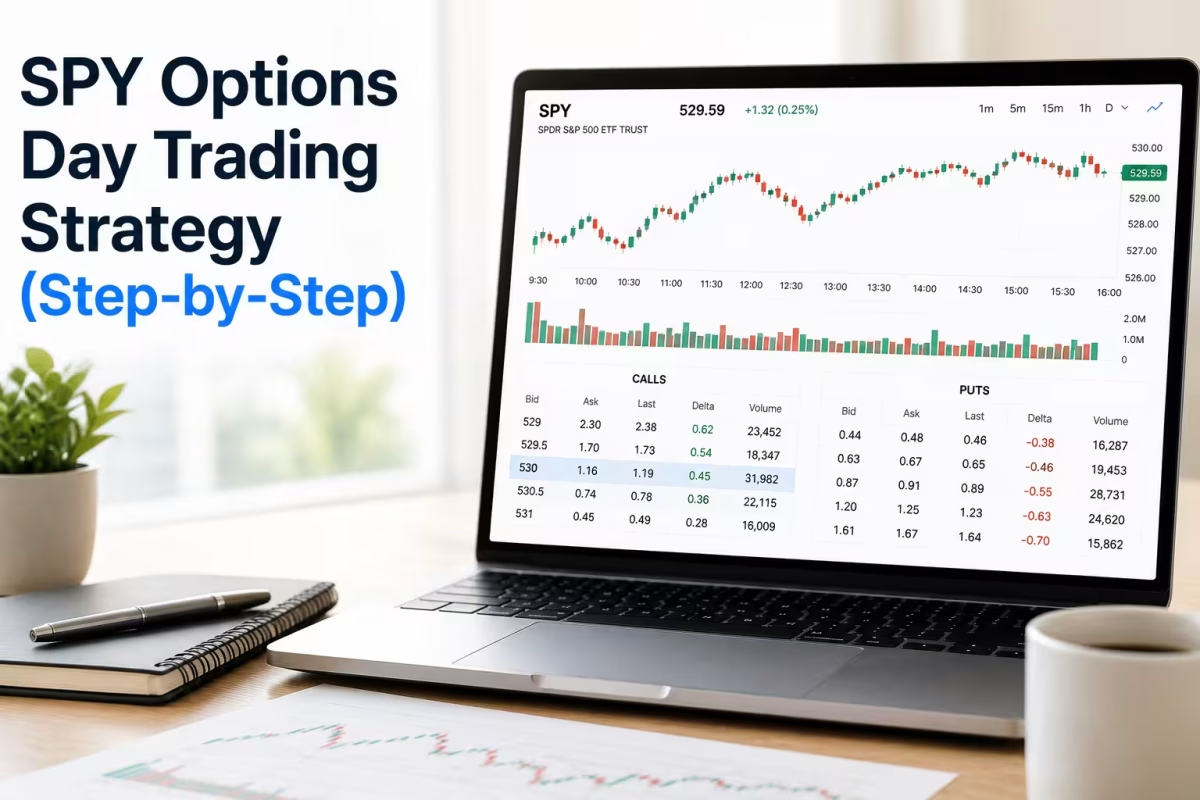
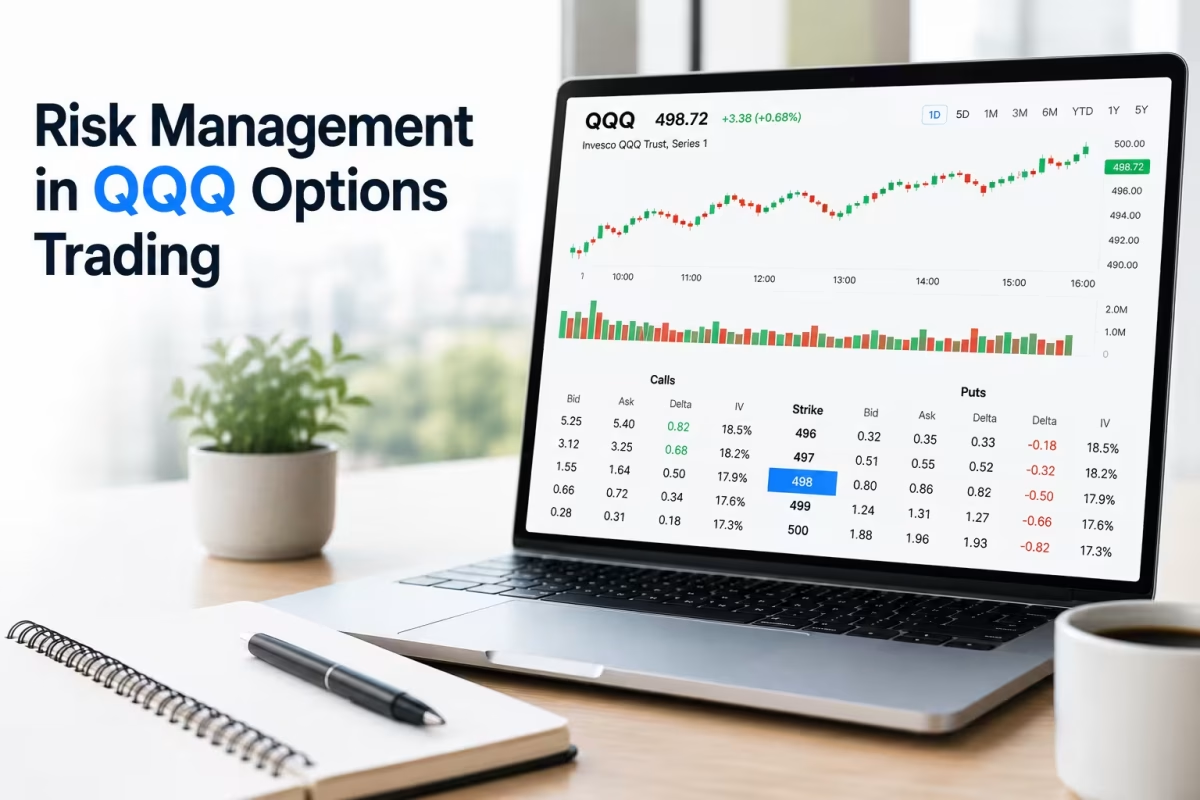
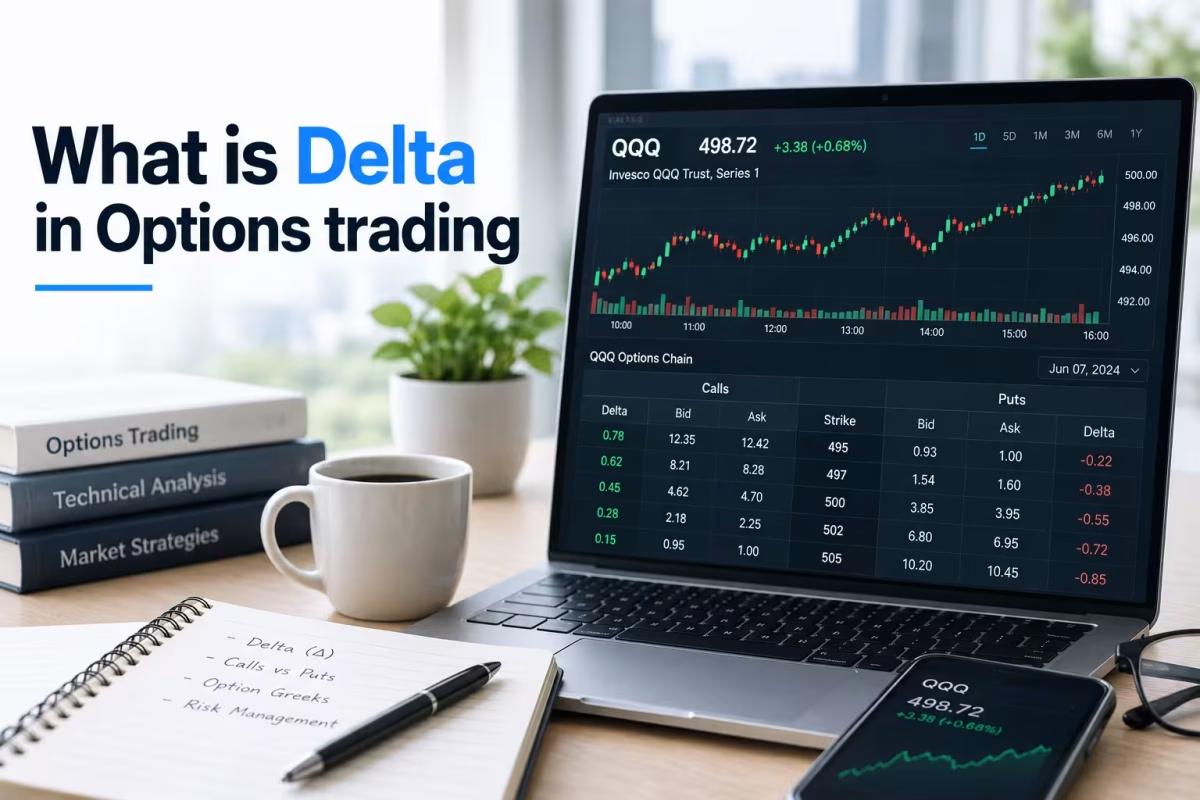
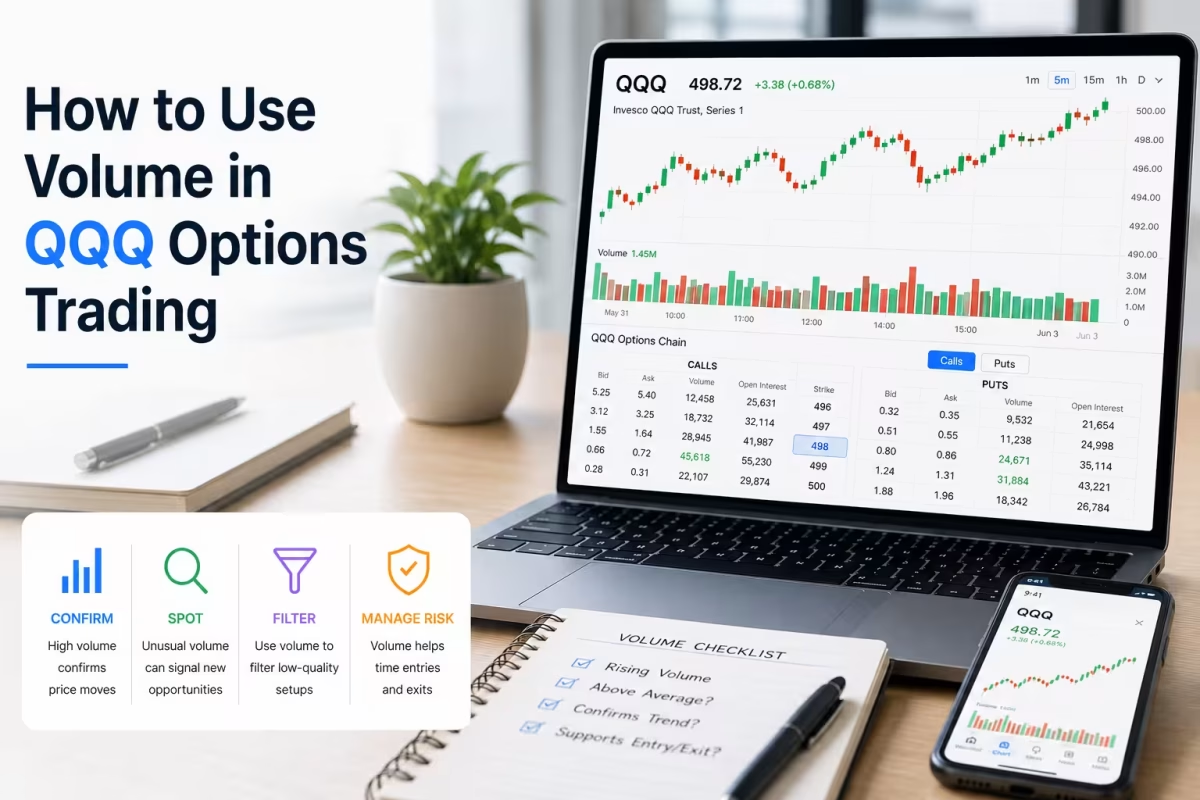
myspyoptions.com

Categories
Finance

Rolling Options Positions: When & How To Do It

“Rolling options” is a term used in situations where a trader decides to close an existing option position and, simultaneously, a new option position is initiated. However, it is done with different strike prices or expiration dates, or a combination of both. This is a technique used for risk management, making profits, or even extending trades without exiting the market completely.

In this blog, you will get to know about when and how you can use rolling options, the different types of rolling strategies, and how you can use different techniques for making better trading decisions. You will also learn how expert advice from Myspyoptions can help you use these strategies with confidence in real-time.


What is Rolling Options and Why Do Traders Use Them?

The term or strategy referred to as “rolling options” is a process where a trader closes his or her current options position and then opens a new one; however, the new option may have different strike prices or expiration dates, or both.

To put it simply, rolling options are as follows:

  • Close a current position → Open a new one

  • Change the strike price or expiry date → Enhance the potential of a trade

  • Reduce loss → Extend a trade


When Should You Use Rolling Options?

You should consider rolling options if your current position is near expiration, moving against you, or you wish to lock in profits while remaining in the trade.

Key Situations

1. When the Option is Near Expiration

As the option gets near to being expired, time decay starts to accelerate rapidly, causing the option’s price to fall.

  • By rolling the option, you are extending the expiry date.

  • You are giving the trade more time to become profitable

More time means a higher chance for profit.


2. When the Trade is Moving Against You

In case the price of the underlying asset moves against you, there is a possibility of losing money on your option.

  • By rolling the option, you will be moving to a different strike price.

  • You will be repositioning your trade based on where the market is moving.

Hence, you will be moving instead of losing money.


3. When You Want to Lock in Profits

In case you are profitable with your current option trade, then rolling would be very important to secure gains.

  • Close the current profitable trade

  • Open a new trade to stay in the market

Hence, you will be protecting your profits while staying in the trade.


4. When Market Outlook Changes

It is possible that you will change your original trade thesis

  • Rolling will help you position your trade according to your new market expectations.

  • It will help you adapt to market changes like volatility and market trends

In a nutshell, flexibility is very important due to changing market conditions.


Types of Rolling Options Strategies

1. Rolling Forward (Extend Expiration)

  • This type of strategy involves rolling to a later expiration date.

  • Used when there is a need for extra time for the position to work

This strategy will help avoid time decay pressure and ensure there is enough time for the strategy to be successful.


2. Rolling Up (Higher Strike Price)

  • This is where the strike price is increased.

  • Used when the market is expected to go higher

This strategy is usually applied by traders if they think the market is going to rise and they want to take full advantage of it.


3. Rolling Down (Lower Strike Price)

  • This is when traders change to a lower strike price

  • Used when the market is bearish.

The strike price is changed to reduce the position and make it suitable for the market movements.


4. Rolling Out and Up/Down (Combination)

  • This is when traders change strike price and expiration

  • Most flexible rolling strategy

This strategy gives the trader the chance to totally redesign their strategy depending on the prevailing market conditions.


Manual vs. Rolling Options Strategy

Aspect

Closing Position

Rolling Options

Market Exposure

Ends completely

Continues

Flexibility

Low

High

Risk Management

Limited

Strategic adjustment

Profit Potential

Fixed

Extended

Time Advantage

None

Increased

Therefore, rolling options offer the trader the chance to be flexible and have control over trades.


How to Roll Options: Step-by-Step Framework

The “ROLL” Framework (Unique Value)

Step 1: R – Review Current Position

  • Analyze profit/loss

  • Check time to expiration

This is the first step where the trader is required to review their current position and understand whether the current position is still consistent with their strategy.


Step 2: O – Observe Market Conditions

  • Identify trends and volatility

  • Review your market outlook

This is the second step where the trader is required to observe the market conditions and roll their position depending on the market conditions and not their emotions.


Step 3: L – Locate New Opportunity

  • Choose a strike price

  • Choose an expiration date

The third step involves choosing a position that will make your success possible.


Step 4: L – Execute the Roll

  • Close the current position

  • Open a new position at the same time

The fourth and final step involves rolling over to a new position to avoid any risks.


Real Use Case: Rolling a Losing Call Option

A trader buys a call option on SPDR S&P 500 ETF Trust (SPY) due to a market prediction of a future price rise.

Problem:

  • The stock is trading horizontally

  • The option is near expiration

Solution:

  • Roll forward to the following month

  • Mild adjustment of the strike price

Outcome:

  • More time for the position

  • More room for improvement


When You Should Not Use Rolling Options

1. When the Trade Thesis is Invalid

If you are wrong in your initial investment, it is pointless to roll. Don’t throw good money after bad. 

2. When Costs Outweigh Benefits

The cost of rolling is additional premiums and brokerage fees. Ensure that you are making a better investment decision.

 3. When Volatility is Too High

High volatility can lead to unpredictable outcomes. Rolling when volatility is high is not advisable.


Common Mistakes Traders Make While Rolling Options

  • Rolling Options Too Late – Near Expiry 

This decreases flexibility and increases the overall risk involved in the trade.

  • Not Factoring Transaction Costs While Rolling Options

This affects the profitability of the trade.

  • Rolling Options Without a Strategy

It leads to emotional decision making.

  • Over-Rolling Options

It increases overall losses over a period of time.


The Role of Expert Guidance in Rolling Options

Rolling options is an extremely powerful strategy, and it is of paramount importance for traders to seek expert guidance so that they can use it in the correct manner so as to align themselves with the overall market trends.

What Myspyoptions Offers to Traders

  • SPY & QQQ Options Alerts

Get notified for options trades on popular ETFs with high liquidity.

  • Expert Insights

Get expert insights on a day-to-day basis, with 15+ years of experience in the market.

  • Proven Strategies

Get expert knowledge on how to trade options successfully.

  • Training Programs

Training programs for traders on how to understand complex market concepts in an easy-to-understand format.

  • Real-Time Updates

Get access to market trends and expert stock picks.


Benefits of Using Rolling Options Strategically

Rolling Options = Risk Management + Opportunity Extension

  • Reduces losses

  • Extension of trade duration

  • Increase in flexibility

  • Improved decision-making


Conclusion: Mastering Rolling Options for Smarter Trading

Rolling options is not just for defensive traders but also for traders who want to be in control of their trades. This is because, when done correctly, this strategy helps traders take advantage of all the opportunities at their disposal.

Key takeaway:

  • Rolling is for adjusting trades dynamically

  • Strategy is more important than timing


Trade Smarter with Expert Guidance

Are you interested in mastering the art of rolling options and trading smarter? Look no further than Myspyoptions, where you will receive expert guidance on all things related to options, including:

  • Real-time SPY & QQQ Options Alerts

  • Proven Strategies

  • Expert Market Insights

Start your journey today and take control of your options trading success.

FAQs

1. What does rolling options mean?

“Rolling options” refers to the closing of a contract and the opening of a new one.

2. Is rolling options profitable?

Rolling options can be profitable if done the right way.

3. When should I roll an option?

You should roll an option when you are nearing expiration, losing money, or making profits.

4. Does rolling options cost money?

Yes, it does cost money.

5. Is rolling options good for beginners?

Yes, it is good for beginners, but beginners should first learn the right ways to do it before starting.


Categories
Uncategorized

Gamma Squeeze in Options: What Traders Need to Know?

Gamma squeeze is a market phenomenon in which sharp price movements force market makers to buy or sell the underlying asset to hedge their risk in the options market. This can lead to dramatic movements in the underlying asset, causing the stock to move up or down rapidly. Many traders take advantage of this phenomenon because it can create powerful short-term trading opportunities.

Gamma squeeze has become popular in recent years due to dramatic market movements involving some of the most actively traded options contracts. Understanding how a gamma squeeze works can help traders manage risk and identify potential trading setups.

What Is a Gamma Squeeze in Options?

A gamma squeeze occurs when options market makers must buy or sell a stock to maintain a delta-neutral position as the stock price changes. This accelerates the price of the stock, often resulting in a sharp upward movement.

In simpler terms:

  • Traders buy a number of options.
  • Market makers hedge those options.
  • The price of the stock is further pushed up
  • The cycle feeds itself and accelerates the move.

Because of this feedback loop, gamma squeezes can create explosive market moves.

Understanding the Role of Gamma in Options Trading

To understand a gamma squeeze, traders first need to know about gamma in options trading.

Gamma is a term used in the Black-Scholes option pricing model, which is a formula used to calculate the price of options. Gamma in this formula measures the rate at which delta changes in relation to a change in the stock price.

Key Definitions

Term Meaning
Delta Sensitivity of option price to changes in the stock price
Gamma Rate of change of delta
Market Makers Firms that provide liquidity for options trading

Tools and Their Functions

Some of the common tools used and their respective functions are as follows:

  • Chicago Board Options Exchange (CBOE) → Provides options trading infrastructure
  • Thinkorswim (TD Ameritrade) → Options analytics and Greeks tracking
  • TradingView → Options-related price monitoring and technical indicators


Why Gamma Matters?

If gamma is high, then:

  • Delta is changing fast
  • Market makers are constantly hedging
  • Prices are rising fast

This is the basic principle of a gamma squeeze.


How a Gamma Squeeze Happens?


A gamma squeeze is generally initiated by traders heavily buying call options at specific strike prices. This forces market makers to hedge by buying the underlying stock, which in turn increases prices.

Step-by-Step Process

  1. Investors buy a large number of call options
  2. These options are sold by market makers.
  3. To hedge their risks, market makers are forced to buy the stock.
  4. The price of the stock increases.
  5. As a result of the price increase, delta also increases.
  6. Market makers are then forced to buy more of stock
  7. This cycle continues, causing a gamma squeeze


Strategy and Result

Strategy Result
Heavy call buying Increased market maker hedging
Hedging demand Stock price acceleration
Price momentum Potential gamma squeeze


Gamma Squeeze vs Short Squeeze

Some traders are not fully aware of the differences between a gamma squeeze and a short squeeze. However, these are two very distinct market forces.

Feature Gamma Squeeze Short Squeeze
Cause Options hedging Short sellers covering
Key players Market makers Short sellers
Trigger High options activity Rising stock price
Market mechanism Delta hedging Forced short covering

Therefore, a gamma squeeze is a market force involving options, whereas a short squeeze is a market force involving short selling.

These two market forces are not mutually exclusive; they can happen simultaneously.


Real-World Example of a Gamma Squeeze

One of the most widely discussed market events associated with a gamma squeeze  is the GameStop Short Squeeze in 2021.

What Happened?

  • Retail traders heavily purchased call options
  • Market makers hedged their exposure by buying the underlying stock
  • Increased demand pushed the stock price higher
  • Price momentum accelerated rapidly

Although this event is commonly referred to as a “short squeeze,” that explanation is not entirely complete. Options activity played a significant role in driving the price movement, which is why many analysts also view it as an example of a gamma squeeze.

Mini Case Study

Stock: GameStop (2021)
Market condition: Extremely high options trading volume
Result: The stock price surged from below $20 to over $400 within a few weeks.

This event highlighted how derivatives markets can strongly influence stock prices.


How Traders Identify a Potential Gamma Squeeze?

Traders usually track options open interest, call-buying volume, and key strike prices to identify potential gamma squeeze conditions.

Custom Framework: Gamma Radar Method

To find a potential gamma squeeze, use the following parameters:

  1. High Call Option Volume

Look out for unusual activity in call options.

Tools:

  • CBOE Global Markets options data
  • Thinkorswim
  • TradingView
  1. Large Open Interest Near Current Price

Look out for strike prices that are very close to the current stock price, as this can cause rapid hedging adjustments.

  1. Rising Implied Volatility

When implied volatility is high, it often signals strong demand for options.

  1. Strong Upward Momentum

Technical indicators can be used to confirm price movements:

  • Moving averages
  • Volume surges
  • Breakouts

Thus, call option buying, strong upward momentum, and high open interest can signal a gamma squeeze.

Risks of Trading Gamma Squeezes

Although gamma squeezes can be profitable, they are also risky.

Major Risks

  1. Extreme volatility

Price movements can be very rapid in both directions.

  1. Liquidity problems

Bid-ask spreads can change significantly.

  1. Rapid reversals

When hedging pressure fades, price movements can reverse quickly.

Problem → Solution

Problem Solution
Sudden volatility Use stop losses
Emotional trading Predefine a trading plan
Overexposure Limit position sizes

Professional traders consider gamma squeeze trades as short-term trades based on price momentum.

How Professional Traders Approach Gamma Squeeze Opportunities?

Professional traders approach gamma squeeze trading differently.

Professional Trading Checklist

  • Analyze options open interest
  • Track gamma exposure levels
  • Analyze institutional activity
  • Confirm using price momentum
  • Implement risk management

Gamma squeeze trading requires not only discipline but also strong data analysis and expertise in options trading.

Learn Advanced Options Trading With MySpyOptions

To understand complex trading strategies such as gamma squeeze trading, traders need proper education and practical market knowledge.

Myspyoptions is a seasoned stock market advisor with 15 years of experience in trading and handling complex market conditions.

Why Traders Trust MySpyOptions

  • Expertise in SPY and QQQ options trading
  • Over 1,000 traders successfully trained
  • Ability to simplify complex strategies such as gamma squeezes
  • Real-world trading advice

Rather than relying on trial and error, traders can learn proven strategies from experienced professionals.

Join Myspyoptions’ training programs and acquire skills to trade comfortably in today’s fast-changing market.

Conclusion

A gamma squeeze is one of the most powerful market phenomena, and occurs when the hedging activities of the options market makers accelerate stock price movements. In this situation, the actions of market makers do not merely reflect market sentiment—they can actively drive price changes.

For traders, understanding gamma squeezes provides valuable insight into how derivatives influence stock prices and contribute to strong momentum swings.

While options trading often reflects market sentiment, it can also play a significant role in shaping overall market movements.

If you want to gain a deeper understanding of options strategies and learn how financial instruments such as SPY and QQQ are traded, structured education can help accelerate your learning. Myspyoptions is an educational platform that helps traders understand and apply advanced options trading strategies. 

FAQs

  1. What is a gamma squeeze in simple terms?

A gamma squeeze occurs when options market makers are forced to buy or sell large amounts of stock to hedge their options positions, which can accelerate price movements.

  1. What causes a gamma squeeze?

Gamma squeezes are typically triggered by heavy buying of call options at specific strike prices.

  1. Is a gamma squeeze bullish?

Yes, gamma squeezes are usually bullish because they often occur during rapid upward price acceleration. However, they can also occur during downward market movements.

  1. How do traders detect gamma squeeze setups?

Traders detect potential gamma squeezes by analyzing options open interest, call volume, implied volatility, and price momentum.

  1. Can gamma squeezes happen frequently?

Gamma squeezes are uncommon, but they may occur during intense options market speculation or significant market events.


Categories
Finance

Wheel Strategy Options: Complete Beginner-to-Pro Guide

The wheel strategy is a popular options trading strategy that involves selling cash-secured puts and covered calls to generate income while acquiring stocks at favourable prices. It is widely used by traders to balance income generation with risk management.


What Is the Wheel Strategy in Options Trading?

The options wheel strategy is a cyclical options trading system where traders sell cash-secured puts to potentially buy stocks at a discount and sell covered calls to generate income on owned shares.

In simple terms, you get paid to buy stocks and then get paid to sell them!

How does the Cycle Work?

  1. Sell a cash-secured put

You get paid for selling the option and agree to buy stocks at a lower price.

  1. Get assigned (or not)

If the stock price falls below your strike price, you purchase the shares.

  1. Sell covered calls

You earn additional income while holding the stocks.

  1. Shares get called away

If the stock rises above your strike price, your shares are sold at a profit—and the cycle begins again.

Hence, essentially, the options trading wheel strategy converts market movements into income-generating opportunities.


Why Is the Wheel Strategy So Popular Among Traders?

The wheel strategy is favored because it provides consistent income, clear entry points, and an organized approach to options trading.

Key Benefits of the Wheel Strategy

  • Recurring Income Generation
    You earn premiums at multiple stages of the strategy, generating income for those looking for profits.
  • Lower Entry Risk
    You can enter positions at discounted prices through put selling.
  • Structured Strategy
    The options wheel strategy is a disciplined, rule-based approach rather than random trading.
  • Works in Sideways Markets
    The strategy generates income even when markets are not trending strongly.
  • Beginner-Friendly with Discipline
    This strategy encourages patience and risk management.

The wheel strategy options method offers a strong balance between income generation and controlled stock ownership.


Step-by-Step Guide to the Wheel Strategy Options

The wheel strategy options consists of five key steps:

Step 1: Choosing the Right Stock

  • Select fundamentally strong stocks such as ETFs or blue-chip stocks.
  • Many traders prefer SPY and QQQ due to their high liquidity and relatively lower volatility.

Step 2: Selling a Cash-Secured Put

  • The put option should be selected with a strike price below the current market price.
  • The investor should have enough money to buy the shares if assigned.

Step 3: Handling the Assignment

  • If assigned, you purchase the shares.
  • Your effective cost is reduced by the premium received.

Step 4: Selling Calls

  • Calls are sold at a strike price above your purchase price.
  • This generates additional income while holding the shares.

Step 5: Repeating the Cycle

  • If shares are called away, restart the process by selling puts again.

Thus, in the wheel strategy options strategy, consistency and discipline are key to long-term success.


Wheel Strategy vs Covered Calls vs Cash-Secured Puts

Strategy Income Source Risk Level Ownership Required Ideal For
Wheel Strategy Puts + Calls Moderate Optional Long-term income traders
Covered Calls Call Premium Moderate Yes Stock holders
Cash-Secured Puts Put Premium Moderate No (initially) Entry-focused traders

The wheel strategy effectively combines covered calls and cash-secured puts into a single, repeatable process.


What Are the Risks of the Wheel Strategy?

While effective, the wheel strategy carries certain risks, related to holding a declining stock and continuing to sell calls at lower strike prices.

Key Risks Explained

  • Stock Price Decline

In case the stock declines substantially, you may end up incurring losses.

  • Opportunity Cost

Your funds will be locked in one position.

  • Limited Upside

Covered calls will limit your profit potential.

  • Assignment Risk

You need to be prepared to buy stocks when selling puts.

The wheel strategy works best with strong and stable stocks and not for speculative stocks.


Best Stocks and ETFs for Wheel Strategy Options

The best stocks or ETFs for the wheel strategy should be liquid, stable, and have a low bid-ask spread.

Ideal Characteristics

  • High liquidity (tight spreads)
  • Strong fundamentals
  • Moderate volatility
  • Consistent options volume

Popular Choices

  • SPY (S&P 500 ETF)
  • QQQ (Nasdaq-100 ETF)
  • Blue-chip stocks like Apple, Microsoft, etc.

Liquidity is often more important than volatility when selecting stocks for this strategy.


Pro-Level Tips to Maximize Wheel Strategy Returns

Advanced investors can maximize the returns from the wheel strategy by improving the strikes, timing, and overall risk management.

Expert Tips

  • Use Delta-Based Strike Selection for the Wheel Strategy Options

Choose strikes with a delta of 0.2 to 0.3 for higher probability.

  • Use Weekly Options 

Weekly expirations allow faster premium collection.

  • Avoid Earnings Volatility

 Sudden price swings can disrupt the strategy.

  • Roll Positions Strategically

 Adjust positions instead of taking unnecessary losses.

  • Track Cost Basis Carefully

 Always calculate adjusted cost after premiums.


Mini Case Study: Wheel Strategy Options Approach in Action

Scenario:

A trader uses the wheel strategy options approach on the SPY stock.

  1. The trader sells a put at $400 and collects a $5 premium.
  2. The trader gets assigned shares at an effective cost of $395
  3. The trader sells a covered call at $410 and collects a $4 premium.
  4. Shares are called away at $410.

Result:

The trader earns a premium of $9, the stock rises by $10, and the total gain is $19.

This demonstrates how the wheel strategy options create multiple income streams.


Common Mistakes to Avoid in a Wheel Strategy Options Approach

  • Choosing Weak Stocks

Poor stock selection can lead to losses.

  • Ignoring Market Conditions

The trader should avoid ignoring the market conditions, especially during a bear market.

  • Over-leveraging Capital

The trader should always maintain sufficient cash reserves.

  • Chasing High Premiums

High premiums are associated with higher risks.

  • Lack of Exit Strategy

The trader should plan a proper exit strategy.

Hence, risk management is more important than premium size.


Conclusion: Should You Use the Wheel Strategy in 2026?

The wheel strategy options trading method remains one of the most reliable methods for generating income in options trading. Its structured and disciplined nature makes it appropriate for both beginners and experienced traders.

In conclusion, success with this strategy does not depend on predicting market direction but on consistency, patience, and proper risk management.


Ready to Master the Wheel Strategy?

If you want to apply the wheel strategy with confidence and real market knowledge, learning from experienced professionals can significantly accelerate your progress.

Myspyptions brings over 15 years of experience in SPY and QQQ options trading, helping traders simplify and effectively apply complex strategies.


What You Get with MySpyOptions

  • Real time SPY & QQQ options alerts
  • Proven income-generating strategies
  • Comprehensive training programs
  • Daily expert market insights
  • Access to real-time trends and signals

Start applying the options wheel strategy the right way with expert guidance from Myspyoptions!


FAQs

  1. Is the wheel strategy appropriate for beginners?

Yes, it is appropriate for beginners due to its structured and repeatable nature.

  1. How much capital is needed?

It depends on the price of the stock. Trading SPY requires significantly more capital than lower-priced stocks.

  1. Can the wheel strategy generate monthly income?

Yes, many traders use it specifically for consistent income generation.

  1. What if the stock continues to fall?

In this case, you will have to hold your stocks for a longer time and adjust your covered call.

  1. Is the wheel strategy profitable in the long term?

Yes, it can be profitable when applied to strong, stable stocks with disciplined execution.

Categories
Finance Options Trading

Zero Days to Expiration (0DTE) Options Explained

The Zero Days to Expiration (0DTE) options are options contracts that expire on the same day they are traded. These ultra-short-term financial instruments enable traders to speculate short-term price movements in the financial market, particularly in highly liquid assets such as the SPDR S&P 500 ETF Trust (SPY) and the Invesco QQQ Trust (QQQ). These options typically expire within a matter of hours.

What Are 0DTE Options?

0DTE options refer to options contracts that expire on the same trading day they are opened. Traders use these options contracts to capitalize on price movements within hours or even minutes. These options are commonly available on popular ETFs such as the SPY (SPDR S&P 500 ETF Trust) and QQQ (Invesco QQQ Trust).
Unlike traditional options, 0DTE options have an extremely high rate of time decay,making them particularly attractive to day traders.
Thus, 0DTE options are designed for high-speed trading strategies.

Why Are 0DTE Options So Popular?

The popularity of 0DTE options has increased significantly after exchanges like the Chicago Board Options Exchange (CBOE) expanded the frequency of expirations on popular ETFs and indices.
Key Reasons for Their Popularity-

1. Intraday Profit Opportunities
There are opportunities to profit from market movements that can occur within minutes.

2. Lower Capital Requirement
The capital required is lower since options offer leverage compared to trading in stocks directly.

3. Daily Trading Opportunities
ETFs such as SPY offer options that expire daily on weekdays.

4. Clear Risk Window
The positions expire at the end of the day.

5. Market Volatility Trading
Events such as announcements from the Federal Reserve and the release of Consumer Price Index data create ideal market conditions.
Hence, 0DTE options have shifted the options market toward a trading instrument rather than a long-term investment tool.

How Do 0DTE Options Work?

0DTE options are similar to any options contract, but they expire on the same day, resulting in rapid time decay, known as theta.
Core Components of 0DTE Options-
– Component
– Explanation
– Underlying asset
– Typically ETFs like SPY or QQQ
– Expiration
– Same trading day
– Time decay
– Extremely fast
– Volatility sensitivity
– Very high
– Holding period
– Minutes to a few hours

For example, a trader may expect the SPY ETF to rise following a positive economic report.In this case, they might:
1. Buy a 0DTE call option
2. Hold the option during the rally in the market.
3. Sell the option prior to the closing of the market.
If the market moves in the anticipated direction, the trader can potentially realize significant profits within a very short timeframe—even in a matter of minutes.

Benefits of Trading 0DTE Options

1. Rapid Profit Potential
The leverage enables the potential for substantial gains in a short period, even from small price movement in the underlying asset.

2. Frequent Trading Opportunities
The availability of daily-expiring options on assets like SPY and QQQ gives traders the opportunity to trade every day.

3. Short Exposure Time
The exposure to risk is for a short period, ranging from minutes to hours.

4. Strategic Flexibility
0DTE options allow a trader to use a variety of strategies, including:
Directional trades
Credit spreads
Iron condors
Scalping strategies
Hence, 0DTE options offer fast-paced trading opportunities, requiring traders to remain disciplined and highly skilled in risk management.

Risks of 0DTE Options Trading

Despite it’s potential benefits, 0DTE options trading carries significant risks.

1. Extreme Time Decay
Options lose value due to time decay, especially as they approach expiration.

2. High Volatility Sensitivity
Small changes in implied volatility can significantly impact options prices.

3. Rapid Loss Potential
Losses can occur within minutes if the trade moves against the trader.

4. Emotional Trading
The fast-paced nature of ODTE trading can lead to impulsive and emotional decision making.

In summary: Traders who succeed in 0DTE options trading focus more on effective management than on chasing profits.

A Simple 0DTE Trading Framework (Unique Strategy Model)
The following outlines a beginner-friendly framework for trading 0DTE options.

The 4-Step Intraday 0DTE Framework

Step 1: Identify the Market Catalyst
Events that can be considered include:
Federal Reserve announcements
CPI or inflation data
Earnings reports
Major market trends

Step 2: Analyze Price Levels
Analytical tools that can be utilized:
TradingView
Thinkorswim by TD Ameritrade
Interactive Brokers Trader Workstation
Focus on:
Support and resistance
Volume spikes
Market momentum

Step 3: Select the Option
Choose contracts:
Expiring the same day
Near-the-money strikes
Having high liquidity

Step 4: Manage Risk
Set:
Stop-loss levels
Profit targets
Maximum position size

A structured trading approach helps reduce emotional decision-making and enhances consistency.

Example: Real 0DTE Trade Scenario
Market Situation
The NASDAQ market opens strong, and QQQ moves up.
Trade Setup
The following example illustrates how a trader might approach 0DTE options when expecting continued momentum.
Trade Element
Example
Asset
QQQ ETF
Strategy
Buy call
Holding period
30 minutes
Expected move
Intraday breakout

Trade Element

Thus, 0DTE options are best suited for experienced or highly disciplined traders.
Outcome
If QQQ goes up substantially, the value of the options could increase by 100% or more in an hour.
This is why 0DTE options have gained significant popularity among traders

0DTE Options vs Traditional Options

Feature
0DTE Options
Traditional Options
Expiration
Same day
Weekly or monthly
Time decay
Extremely fast
Moderate
Holding period
Minutes or hours
Days to weeks
Risk level
High
Moderate
Trader type
Day traders
Swing or long-term traders

Thus, 0DTE options are best suited for experienced or highly disciplined traders.

Tools Used by 0DTE Traders
Professional traders rely on advanced tools designed to manage fast-moving options.
Common Platforms
TradingView – chart analysis
thinkorswim – advanced options trading platform
Interactive Brokers – professional-level brokerage tools
OptionStrat – strategy visualization
Tools and their Functions

Tool
Function
TradingView
Technical chart analysis
Thinkorswim
Options trading platform
OptionStrat
Strategy payoff visualization

Mini Case Study: Learning 0DTE Strategies

Options can be challenging for traders due to advanced pricing models such as Black-Scholes and concepts like theta decay and implied volatility.
Experienced trading mentors can simplify these concepts through structured learning programs.
For example, professional trading educators with extensive experience in SPY and QQQ options training programs can:
Teach about intraday price movements
Emphasise disciplined risk management
Provide repeatable trading strategies
The structured approach helps traders move from guessing market direction to executing well-defined trading strategies with confidence
Conclusion: Should You Trade 0DTE Options?
0DTE options are one of the fastest-growing areas in the options market. These contracts enable traders to benefit from intraday price volatility , especially in liquid ETFs like SPY and QQQ.
However, these factors such as leverage, speed, and high volatility also increase the risks associated with options trading.
Therefore, if traders are interested in 0DTE options, it is essential to first educate themselves and fully understand the risks involved in options trading.
Learn 0DTE Options from Experienced Market Experts.
If you want to learn options trading—particularly in SPY and QQQ— gaining guidance from experienced market mentors can make a significant difference.
Myspyoptions is a seasoned stock market advisor with over 15 years of experience in dealing with various complexities in the stock market. They specialize in SPY and QQQ options trading and have helped over 1,000 traders build a strong understanding of options and develop essential trading skills.
Myspyoptions provides guidance and insights in options trading with an aim to help traders understand various trading complexities. They focus to helptraders:
Understand various complexities of options trading
Develop necessary skills in options trading
Strengthen risk management strategies
Regardless of whether you are a novice in options trading or want to improve your options trading skills, Myspyoptions provides the knowledge and support needed to grow in options trading.

FAQs

1. What does 0DTE mean in options trading?
0DTE stands for Zero Days to Expiration. This means that the options contract expires on the same day the trade is executed.

2. Are 0DTE options risky?
Yes. Due to high leverage and time decay, traders risk losing money on a trade if it does not go in their favor.

3. Which assets have 0DTE options?
The assets available for trading include:
SPY (SPDR S&P 500 ETF)
QQQ (Invesco QQQ Trust)
SPX Index options

4. Can beginners trade 0DTE options?
Beginners should first build a solid understanding of options trading fundamentals, risk management strategies, and technical analysis before trading 0DTE options.

5. Why do traders like 0DTE options?
People trade 0DTE Options because:
They offer daily profit opportunities.
They offer high leverage.
They enable consistent daily trading setups


Categories
Finance Options Trading

Straddle vs Strangle: Which Options Strategy is Better?

Are you a trader in the US market? Then, you must be familiar with the very popular options strategies, straddle and strangle. These strategies help you to profit from the volatility of the market. Though both these strategies involve buying both call and put options, their execution and risk/rewards differ.

Hence, there is always a debate that out of straddle vs strangle, which one is the more appropriate approach while trading. Both these strategies are highly useful, and choosing one depends on your trading goals. To select the most apt strategy for you, you must first clearly understand these two strategies in detail, along with the similarities and differences between the two.

This MySpyOptions guide will take you through a detailed analysis of straddle and strangle, their advantages and disadvantages, and which strategy to choose out of straddle vs strangle.

What is a Straddle?

A straddle involves buying a call option and a put option with the same strike price and the same expiration date. It is used by traders when they expect a big price movement in either direction. For example, buying a call and put at $100 strike price is a straddle.

The advantages of straddle are:

  • It is profitable if the stock moves sharply in either direction—up or down.
  • It is simple to execute, as it has only one strike price.
  • This strategy works well at the time of earnings announcements or news events.

The disadvantages of straddle are:

  • It is expensive, as there is a higher combined premium cost.
  • To make the trade profitable, there needs to be a significant price movement in the stock.

What is a Strangle?

A strangle involves buying a call option and a put option, but with different strike prices. Both options will have the same expiration date, as in case of a straddle. This strategy is employed by the traders when they anticipate volatility in the market but they want to reduce the upfront costs. For example, buying a call at $105 and a put at $95 when the stock is at $100 is a strangle.

The advantages of strangle are:

  • It is cheaper than straddle since options are out-of-the-money.
  • It provides flexibility in capturing market movement on both sides.
  • The lower cost of this strategy makes it more accessible for small traders.

The disadvantages of strangle are:

  • It requires an even larger price movement than straddle to become profitable.
  • It is also more complex than straddle because you need to use different strike prices.

Straddle vs Strangle: Key Differences

The key differences between straddle and strangle are:

  • Strike Price: Straddle uses the same strike price for both call and put, however, strangle uses different strike prices.
  • Cost: Straddle is more expensive than strangle.
  • Profit Potential: Both straddle and strangle benefit from the volatility of the market, however, for the trade to be profitable, there needs to be a lesser price movement in straddle than in strangle.
  • Risk: In both cases, risk is limited to the premium paid, but the cost differs.

Straddle vs Strangle: Which Strategy Is Better?

The choice between the straddle vs strangle depends on how much risk you are ready to take, your budget, and your market outlook.

Straddle is recommended when:

  • You are expecting a big move in either direction (up or down).
  • You are okay with paying a higher premium for closer strikes.

Strangle is recommended when:

  • You want a cheaper entry with reduced upfront cost.
  • You are expecting a high volatility to cover the wider strike gap.

Looking to master the US market with trading strategies such as straddle and strangle?

Visit MySpyOptions, your trusted trading partner, to receive training, trading tips, and expert market insights right now.

Do not trade blindly—learn to use strategies such as straddle and strangle and make smarter decisions today!

FAQs

Q1: Which is safer, straddle or strangle?

Both straddle and strangle involve risk limited to the premium paid. However, strangle has lower upfront costs, and straddle needs lesser price movement to become profitable.

Q2: Can beginners use these strategies?

Yes, definitely. Beginners can use these strategies to up their options game, however, we advise that you practice with paper trading first before risking your real money.

Q3: When is the best time to use a straddle?

The best time to use the straddle strategy is at the time of earnings announcements, news events, and market uncertainty.

Q4: Why choose a strangle over a straddle?

A strangle is preferred over straddle when you are looking for a cheaper entry and have lesser capital.

Q5: Do both strategies profit if the market doesn’t move much?

No, both lose value if the underlying stock stays flat.


Categories
Finance Options Trading

How to Trade Weekly Options for Quick Profits?

Wondering what the weekly options are and why it is touted as a great strategy to make quick gains? If you are a trader in the US market and wondering how to make profits using powerful strategies, then you are at the right place!

Through this blog we will try to explain to you the tips and techniques for effective weekly options trading and also the associated risks.

What are Weekly Options?

Weekly options are short-term contracts that expire every Friday. The expiry may be on a different day depending on the ETF or the indexes. These contracts are perfect for the traders looking to capitalize on fast price movements and make quick profits. This strategy involves high liquidity and minimal cost, and is most favored by day traders and swing traders.

Let us try and understand why and how to trade weekly options.

Why Trade Weekly Options?

Below-mentioned are some of the benefits weekly options have to offer:

  • Lower Premiums: Weekly options are cheaper to buy than monthly options.
  • Rapid Returns: Can provide gains in days, not weeks.
  • Greater Flexibility: Best suited for reacting immediately to news, earnings, and volatility.
  • Scalability: Beginners can start small, while experienced traders can scale up.

Best Weekly Options Strategies for Quick Profits

Some of the best weekly options strategies that you can utilize include:

A. Buying Weekly Calls or Puts 

  • This is an easy but effective weekly options strategy for bullish or bearish trends.
  • Purchase calls if you anticipate the price to increase and purchase puts if you anticipate it to fall.
  • Note that this is a directional strategy and best suited for volatile markets.

    1. Selling Covered Calls
  • Sell weekly call options on stocks that you already own.
  • This will give you weekly returns in a stable way while you hold your stock positions.
  • It is best for conservative traders seeking stable returns.

    2. Credit Spreads

  • This strategy is for bull put or bear call spreads and requires selling one option and buying another to cordon off risks.
  • This strategy will help in earning quick returns while managing potential losses.
  • It is ideal for traders who are looking for a defined risk-reward setup.

3. Iron Condor Strategy 

  • This is a strategy for mature traders and involves credit spreads on both sides when you anticipate little price movement.
  • It helps in earning profits due to time decay and flat price ranges.
  • It involves less risk but requires accuracy at entry points.

Want to learn more about the iron condor strategy? Check out our blog here!

Tips to Succeed in Weekly Options Trading

Following are some handy tips that we would suggest, based on our 15+ years of experience mentoring US market traders:

  • Select Liquid Stocks & ETFs: Buy highly liquid stocks such as SPY, QQQ, AAPL, and TSLA.
  • Monitor Market Volatility: Use the VIX index to measure risk.
  • Place Stop-Loss & Targets: Always control downside risks with rigid exit rules.
  • Apply Technical Analysis: Study price trends, resistance, and support.
  • Keep Current with News: Earnings reports, Fed announcements, and economic data can create big moves.

Risks of Weekly Options Trading

Weekly options trading is a very profitable strategy and is widely used; however, it also has its disadvantages. Some of the associated risks are as mentioned:

  • High Volatility: The prices can fluctuate wildly in a matter of hours.
  • Time Decay: Weekly options lose their value at a faster rate as the expiration date approaches.
  • Leverage Risk: Small mistakes can translate to enormous losses.
  • Risk only what you can afford to lose easily.

Are you all set to upgrade your knowledge on option trading?

Visit MySpyOptions, your dependable trading partner, for training, tips on trading, and expert market knowledge now.

Do not trade blindly—begin trading weekly options and expand your portfolio!

FAQs

Q1. What are weekly options?

Weekly options are short-term option contracts that expire each Friday. The expiry can be on a different day based on the ETF or the indexes. These contracts are ideal for traders who want to take advantage of quick price action and make faster profits.

Q2. Are weekly options good for beginners?

Yes, weekly options can be utilized by beginners to build their portfolio. However, it is advised that beginners start small while using this strategy and focus on the basics, such as buying calls or puts, before moving on to the advanced spreads.

Q3. What is the best weekly options strategy?

The best weekly options strategy to make rapid profits includes purchasing weekly calls/puts or credit spreads.

Q4. How much money do I need to start trading weekly options?

You can start trading weekly options with as little as $100–$500. If you are a beginner, we advise you to start small and scale as you gain experience. This helps you manage risk carefully and understand better as you trade further.

Q5. Can I trade weekly options on SPY and QQQ?

Yes. ETFs such as SPY and QQQ are highly sought after for weekly options trading because they have high liquidity and volume. This is advantageous for most traders to make rapid profits.


Categories
Finance Options Trading

Iron Condor Options Strategy: Step-by-Step Guide

Trading options successfully, in the US market, requires strategies that balance risk and reward. One of the most popular options strategies, based on this principle, is the iron condor.

The iron condor strategy allows the traders to generate steady income from range-bound markets. And to top up, it comes with limited risk and clear profit potential.

Are you new to the trading and options market and want to understand more about this strategy? Don’t worry, you are at the right place! In this guide, we will break down what the iron condor is, how it works, step-by-step instructions on how to use it, and the best tips and practices that we recommend while using this strategy.

What is an Iron Condor?

The iron condor is an advanced options trading strategy perfect for low-volatility markets. It involves selling one out-of-the-money (OTM) call spread and one OTM put spread simultaneously.

Hence, the goal of the iron condor strategy is to gain profits when the underlying stock or index is staying within a defined price range.

Note that this strategy is market-neutral, and hence, you will not be betting on the price direction but on the fact that the price will remain stable.

How the Iron Condor Options Strategy Works?

In the iron condor options strategy there are four options involved:

  • Sell 1 OTM Call
  • Buy 1 OTM Call (further out)
  • Sell 1 OTM Put
  • Buy 1 OTM Put (further out)

All these four options together create two spreads:

  • Bear Call Spread (on the top)
  • Bull Put Spread (on the bottom)

So, where is the profit potential? Maximum profit is earned from the premium collected from both the spreads.

Step-by-Step Guide to Trading an Iron Condor

Now that you have understood what the iron condor is and how it works, let us guide you on how to incorporate this strategy in your trading:

Step 1: Choose the Right Stock or Index

  • Look for low-volatility stocks or ETFs.
  • Iron condor is best for SPY, QQQ, IWM, or stable blue-chip stocks.
  • It is ideal when you believe the price will stay within a specific range.

Step 2: Set Your Expiration Date

  • Choose options. 30–45 days to expiration for optimal time decay.
  • Shorter expirations mean quicker profits but higher risks.

Step 3: Pick Your Strike Prices

  • Select OTM strikes where the underlying price rarely trades beyond.
  • For example, if SPY = $450, then
    • Sell $460 Call
    • Buy $465 Call
    • Sell $440 Put
    • Buy $435 Put

Step 4: Calculate Risk & Reward

  • Note that maximum profit is the net premium collected.
  • Maximum loss is the difference between the spreads and the premium collected.
  • In iron condors, the risk-to-reward ratio is typically 1:1 or 1:2 and usually depends on strike selection.

Step 5: Enter the Trade

  • Place the iron condor order as a single multi-leg trade.
  • Remember to confirm premiums, expiration, and strikes before executing.

Step 6: Manage the Trade

  • Set profit targets. When you do this, aim to close when you have earned 50–70% of the maximum profit.
  • Use stop-loss orders to control risk.
  • Additionally, remember to adjust if the underlying price approaches your short strikes.

Step 7: Exit the Trade

  • Close both spreads together or individually.
  • And most importantly, don’t hold till expiration if the trade gets risky. Always remember that risk management is key when trading using iron condor on the US market.

When to Use the Iron Condor Strategy

Now that you know how to use the iron condor strategy, please note that timing is key to ensure you earn the maximum potential. Hence you must know when to use this strategy.

The best market conditions to use iron condor are:

  • Low volatility
  • Sideways or range-bound movement

And you should avoid using iron condors during:

  • Earnings reports
  • Major news events
  • Sudden spikes in implied volatility

Pros & Cons of Iron Condor Options

If you have heard about the iron condor strategy being used by traders, you already know that it is a highly useful and profitable strategy in options trading. To list out the advantages, it:

  • Generates consistent income
  • Has limited, defined risk
  • Works well in neutral markets
  • It is flexible – You can adjust or close early.

However, on the flip side, the iron condor also has its disadvantages. Some of the disadvantages are as mentioned:

  • It requires precise strike selection.
  • It has limited profit potential.
  • It is sensitive to high volatility.
  • In iron condor strategy, risk increases if the price breaks out of the range.

Pro Tips for a Winning Iron Condor Strategy

Here are some useful tips that we would recommend, based on our 15+ years of mentoring experience to traders in the US market:

  • Focus on liquid stocks and ETFs for tight spreads.
  • Aim for 30–45 DTE for an optimal balance between risk and reward.
  • Always analyze implied volatility (IV) before entering.
  • Manage trades actively. Do not continue with losses for longer periods.
  • Diversify across multiple tickers to reduce portfolio risk.

Are you all geared up to enhance your option trading skills?

Visit MySpyOptions, your trusted trading partner, to receive training, trading tips, and expert market insights right now.

Do not trade blindly—learn to use iron condor and make smarter decisions today!

FAQs

Q1. Is the iron condor strategy suitable for beginners?

Yes, the iron condor strategy can be utilized by beginners also. However, ensure that you understand options spread and risk management well to ensure that you gain maximum profits and minimal loss from it.

Q2. What’s the ideal win rate for iron condor trades?

The general trend is a 60-75% win rate when trading high-probability setups. This is what most traders aim for when using the iron condor strategy.

Q3. Can I lose more than I invest?

When using the iron condor strategy, you can be rest assured that you will not lose more than you have invested. Losses are limited in the iron condor scenarios because you are using defined-risk spreads.

Q4. Is the iron condor profitable in high-volatility markets?

No, the iron condor is not recommended in high-volatility markets. The strategy has been found to perform best when volatility is low and prices stay within range.

Q5. What’s better—weekly or monthly iron condors?

For beginners, monthly iron condors are recommended because weekly iron condors are riskier. However, as the latter allow faster profits, you can definitely start using weekly iron condors once you are confident in using them.

Categories
Finance Options Trading

Options Scalping Strategies That Actually Work

Options trading offers countless strategies, but for traders looking to profit from short-term price movements, scalping is one of the most popular approaches. Options scalping involves making multiple quick trades throughout the day to capture small gains that can add up to significant profits.

In this guide, we’ll cover what options scalping is, how it works, proven scalping strategies, tools you’ll need, and risk management rules every trader should follow.

What is Options Scalping?

Options scalping is a day trading strategy where traders aim to profit from tiny price changes in options contracts. Instead of holding positions overnight, scalpers open and close multiple trades within minutes or hours.

The primary goal is to leverage high liquidity and volatility to earn consistent small profits while minimizing exposure to large market swings.

When to Use Options Scalping

Options scalping works best in:

  • Highly liquid options (SPY, QQQ, AAPL, TSLA, NVDA, etc.)
  • High volatility environments (earnings days, Fed announcements, market open)
  • Short timeframes where momentum is strong

Scalping is not suitable for all traders—it requires discipline, speed, and a solid risk management plan.

Check our Blog – Can You Buy and Sell Stocks the Same Day?

Options Scalping Strategies That Actually Work

1. Momentum Scalping with At-The-Money (ATM) Options

  • Focus on ATM calls or puts when the stock breaks a key support/resistance level.
  • Trade short expirations (same day or weekly) for maximum sensitivity to price movement.
  • Close trades quickly (30 seconds to a few minutes) once you’ve made a small gain (e.g., 10–20%).

Tip: Always scalp liquid tickers with tight bid-ask spreads.

2. VWAP Bounce Strategy

  • Use the Volume Weighted Average Price (VWAP) indicator as a key reference.
  • Enter scalps when the price touches VWAP and shows reversal signs.
  • Buy calls if bouncing above VWAP; buy puts if rejecting VWAP from below.

This method works well in choppy intraday markets where price gravitates around VWAP.

3. Breakout Scalping

  • Identify consolidation zones on the 1-minute or 5-minute chart.
  • Enter when the stock breaks above resistance (for calls) or below support (for puts).
  • Use tight stop losses and quick exits (often under 2 minutes).

Breakouts during the first 30 minutes of market open can be highly profitable for scalpers.

4. Gamma Scalping

  • Gamma scalping is a more advanced strategy where traders adjust delta exposure by scalping around a hedged options position.
  • Works best for traders who already understand Greeks and have experience managing options risks.

While complex, this strategy allows scalpers to profit from both price movement and volatility.

Tools You Need for Options Scalping

  • Brokerage with fast execution (Thinkorswim, Interactive Brokers, Tastytrade)
  • Level II data and real-time options chain
  • 1-min and 5-min candlestick charts
  • VWAP, EMA (9 & 21), RSI
  • News scanners for market-moving headlines

Risk Management in Options Scalping

Scalping is fast-paced, and discipline is the key. Follow these rules:

  • Risk no more than 1–2% of your account per trade\
  • Use tight stop losses (don’t let trades turn into swings)
  • Avoid illiquid contracts with wide spreads
  • Stick to A+ setups only—quality over quantity
  • Take profits quickly (greed kills scalpers)

Pros and Cons of Options Scalping

Pros:

  • Quick profits
  • Lower exposure to overnight risk
  • Works well in volatile markets

Cons:

  • Requires constant focus
  • High commissions/slippage if not careful
  • Emotionally and mentally draining

Final Thoughts

Options scalping can be a profitable strategy for disciplined traders who thrive in fast-moving markets. By combining momentum setups, VWAP plays, and breakout strategies, traders can capture consistent small gains that add up over time.

Remember that the key to successful options scalping is not just strategy, but also risk management, discipline, and execution speed.

If you want to explore real-time options trade alerts, strategies, and scalping insights, check out MySpyOptions — your partner for smarter options trading.


Categories
Finance Options Trading

Options Flow: How to Use Options Flow Data to Find Winning Trades?

When it comes to trading, information is everything. Stock charts, earnings reports, analyst upgrades, and news headlines all give traders insights into where the market might be headed. However, there is one increasingly popular tool that goes beyond traditional analysis — options flow data.

Options flow has become a favorite tool among both retail and professional traders because it provides a unique understanding and view into what big money players are doing in the options market. In this article, we’ll cover what options flow is, how to interpret it, and how you can use it to identify potential winning trades.

What is Options Flow?

Options flow refers to the real-time record of large options trades that take place in the market. These trades — often made by hedge funds, institutional investors, or high-net-worth traders — can reveal unusual options activity (UOA).

Unlike small retail trades, big block orders often point to a trader or institution taking a serious directional bet on a stock, ETF, or index. By tracking these orders, everyday traders can “follow the money” and spot potential opportunities.

For example:

  • If an institution buys thousands of call options on a stock, weeks before earnings, it may indicate they’re bullish and expecting a price increase. 
  • If you see heavy put buying on a stock with no major news, it might suggest that the insiders or hedge funds are expecting a sharp drop. 

Why Options Flow Matters

Options flow gives traders insights they can’t get from charts or fundamentals alone. Here’s why it’s valuable:

  1. Tracks Institutional Activity – Big players move markets. Their trades can reveal sentiment before retail investors catch on. 
  2. Unusual Options Activity (UOA) – Large, out-of-the-money, or near-term option trades often stand out as “unusual” and may signal strong conviction. 
  3. Market Sentiment Gauge – A surge in calls vs. puts can show overall bullishness or bearishness in the short term. 
  4. Early Signals – Sometimes, options flow picks up moves, before news hits the market (e.g., M&A rumors, analyst upgrades, or earnings beats). 

How to Read Options Flow Data

Reading options flow isn’t about reacting to every trade you see. It’s about filtering and identifying the most meaningful activity. Here are some key factors to consider:

1. Trade Size

  • Large block trades (hundreds or thousands of contracts) are more significant than small trades. 

2. Trade Direction

  • Call buying usually signals bullish bets.
  • Put buying often signals bearish sentiment.
  • Call selling / Put selling can reflect income strategies rather than directional bets. 

3. Strike Price & Expiration

  • Out-of-the-money calls or puts with near-term expirations often show aggressive speculation.
  • Longer-dated expirations may indicate long-term positioning. 

4. Premium Paid

  • The more the premium spent, the higher the conviction. A $2 million call buy is more meaningful than a $20,000 trade. 

5. Context with News & Charts

  • Don’t analyze options flow in isolation. Always compare it with the stock’s technical setup, sector news, and earnings calendar. 

Examples of Options Flow in Action

Let’s look at two common scenarios:

📈 Bullish Example

Suppose you see a trader buy 10,000 call options on Tesla, expiring in two weeks, at a strike price above the current stock price. This unusual activity could indicate expectations of an upside move — perhaps in anticipation of earnings or a product launch.

📉 Bearish Example

On the other hand, if there’s heavy put buying on a bank stock right before earnings, it could be a hedge fund betting that the results will disappoint.

In both cases, the options flow acts as an early signal to traders watching the market.

Tools to Track Options Flow

There are several platforms that provide access to real-time options flow data. Some popular ones include:

  • Unusual Whales
  • FlowAlgo
  • Cheddar Flow
  • BlackBoxStocks 

These tools aggregate options flow in a dashboard format, allowing traders to quickly filter by ticker, strike, expiration, and volume.

Strategies to Trade with Options Flow

If you want to use options flow effectively, consider these strategies:

  1. Confirmation Tool – Use flow to confirm your technical or fundamental analysis before entering trades.
  2. Short-Term Trading – Track near-term, high-volume calls or puts buys for quick opportunities.
  3. Earnings Plays – Watch unusual flow ahead of earnings to gauge sentiment.
  4. Sector Rotation – Follow institutional activity across sectors (tech, energy, financials) to see where the smart money is going. 

⚠️ Important: Not every unusual options trade leads to a profitable move. Institutions sometimes hedge or balance portfolios with options. Always combine options flow with risk management.

Common Mistakes to Avoid

  • Chasing Every Trade: Don’t jump into every large option order — some of these orders are hedges.
  • Ignoring Expiration Dates: Near-term contracts may expire worthless if the move doesn’t happen quickly.
  • Overleveraging: Options are risky, hence, keep position sizes under control. 

Final Thoughts

Options flow is a powerful tool that helps traders spot where the “smart money” is betting. By learning how to read unusual options activity, filtering meaningful trades, and combining insights from your analysis, you can gain an edge in the market.

If you’re new to options flow or want expert guidance on how to integrate it into your trading strategy, consider reaching out to MySpyOptions. Our team provides insights, strategies, and advisory support to help traders make smarter, more confident decisions in the options market.

Categories
Finance Options Trading

How to Use Implied Volatility in Options Trading?

Options trading is all about probabilities and pricing. One of the most important factors that influence the price of an option is implied volatility (IV). Understanding implied volatility can help traders choose the right strategy, manage risk, and identify opportunities in the market.

In this guide, we’ll break down what implied volatility is, how it works, why it matters for options pricing, and the trading strategies that depend on it.

What is Implied Volatility?

Implied volatility in options trading is the market’s forecast of how much an asset (like a stock or index) is expected to move over a specific period of time. Unlike historical volatility, which measures past price fluctuations, implied volatility is forward-looking.

In simple terms:

  • High IV = the market expects large price swings.
  • Low IV = the market expects smaller, steadier price movements.

Implied volatility is not a prediction of direction (up or down). Instead, it reflects the expected magnitude of movement.

Why Implied Volatility Matters in Options Trading

Options pricing models (like the Black-Scholes model) use implied volatility as one of the key inputs.

  • When IV increases, the premium of options (both calls and puts) generally rises.
  • When IV decreases, option premiums usually fall.

This means that the traders who understand IV can make better decisions about:

  • Whether options are cheap or expensive
  • Which strategies to apply in high vs low volatility environments
  • How to manage risk and reward in changing market conditions

How Implied Volatility Affects Option Pricing

To understand the impact of IV, let’s break it down with an example.

Suppose a stock is trading at $100:

  • If implied volatility is 20%, the market expects small price swings. A call option might cost $2.
  • If implied volatility rises to 40%, the same call option might cost $4–$5, even if the stock price hasn’t moved.

This is why professional traders often say: “You don’t just trade options, you trade volatility.”

High Implied Volatility vs Low Implied Volatility

High IV Environment

  • Option premiums are expensive.
  • Best suited for options sellers, because they can collect higher premiums.
  • Strategies: Credit spreads, iron condors, covered calls.

Low IV Environment

  • Option premiums are cheaper.
  • Better for options buyers, since they pay less upfront.
  • Strategies: Long calls, long puts, debit spreads, straddles in anticipation of rise in volatility.

Common Strategies Using Implied Volatility

1. Selling Options in High IV

When IV is high, option premiums inflate. Traders can sell options to capture premiums that may shrink as volatility returns to normal.

  • Example: Iron condor to profit from overpriced options.

2. Buying Options in Low IV

When IV is low, options are relatively cheap. Traders can buy calls or puts to benefit from potential breakouts or volatility spikes.

  • Example: Long straddle when expecting an earnings surprise.

3. Volatility Crush Around Earnings

Stocks often see high IV before earnings due to uncertainty. After results are announced, IV drops sharply — a phenomenon called volatility crush.

  • Traders who buy options before earnings may lose even if they predict the direction correctly, because IV collapses.

4. Using IV Percentile & IV Rank

  • IV Percentile tells how today’s IV compares with the past year.
  • IV Rank shows where the current IV stands relative to its high and low.
    These tools help traders decide whether options are expensive (good for selling) or cheap (good for buying).

Implied Volatility and Risk Management

Understanding IV is also critical for managing risk.

  • High IV = higher potential reward, but also higher risk.
  • Low IV = lower potential reward, however, more predictable moves.

Smart traders adjust position sizing, strike selection, and strategy type based on the current volatility environment.

Key Takeaways

  • Implied volatility reflects market expectations of price movement.
  • High IV = expensive options (good for sellers).
  • Low IV = cheap options (good for buyers).
  • Strategies must adapt to volatility conditions.
  • Always track IV percentile/rank before entering a trade.

By mastering implied volatility, traders can improve timing, reduce risk, and maximize profitability in options trading.

FAQs

Q1. Is high implied volatility good or bad for options traders?
It depends. High IV benefits option sellers because they collect higher premiums. For buyers, high IV means paying more upfront, which increases risk.

Q2. How do you know if implied volatility is too high?
Check the IV rank or IV percentile of the stock. If IV rank is above 70–80, it usually means options are relatively expensive.

Q3. Can implied volatility predict stock market crashes?
Not directly. Implied volatility doesn’t forecast direction, but extreme spikes in IV can signal market fear or uncertainty.

Q4. What is a good implied volatility for day trading options?
There is no “one size fits all,” but many day traders prefer IV levels that are moderate to high because they create larger intraday price swings.

Final Thoughts

Implied volatility is the heart of options trading. Without understanding it, traders risk overpaying for contracts or misjudging market conditions. By learning how IV impacts pricing and applying the right strategies, you can trade with more confidence and consistency.

👉 If you’re looking for personalized guidance and real-time option trading alerts, consider connecting with MySpyOptions — your trusted advisor for navigating the world of options trading.