
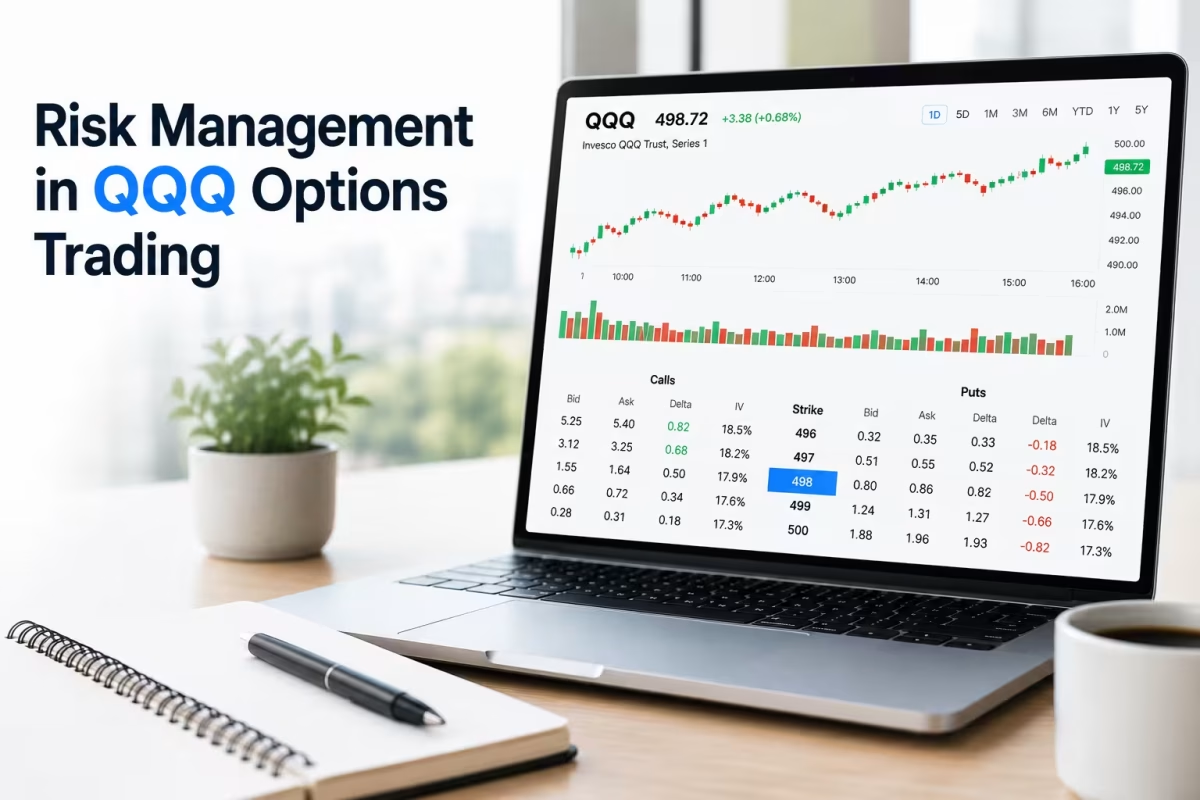
Investing in QQQ options enables traders to take advantage of price movements in the QQQ ETF without necessarily holding the underlying assets. The Invesco QQQ ETF tracks many of the largest non-financial companies listed on the Nasdaq Index, most of which have a growth or technology focus. While there is profitability in investing in QQQ options, it is important to understand that trading in QQQ options does come with some risk, especially when leverage is involved.
Successful traders not only profit from identifying opportunities but also manage their risks. Managing risk in options gives traders the opportunity to limit losses, control their exposure to the market, and make proper decisions. In this article, we will discuss some risks related to QQQ options trading and their effective management. Read on!
What Is QQQ Options Trading?
QQQ options trading implies either buying or selling options contracts, the price of which depends on price changes in the Invesco QQQ ETF that represents the Nasdaq-100 Index. Traders can enter positions using options contracts and speculate on whether QQQ will rise or fall within a specified period.
As QQQ includes many large technology and growth-oriented companies, traders’ interest in QQQ options is associated with short-term opportunities. However, due to the use of leverage in QQQ options trading, it is necessary to understand the basics of pricing, volatility, and risk control before entering a trade.
Understanding the Risks of QQQ Options Trading
Options allow traders to profit from price movements in the Invesco QQQ ETF without buying its shares. High volatility is one of the main characteristics of QQQ due to the presence of many technology companies in its composition.
If QQQ is trading at $450 and rises by 3% to $463.50, it results in a gain of $13.50 per share. However, as QQQ options trading involves leverage, the same price movement causes larger percentage changes in the price of the options contract. Proper QQQ options risk management is required to avoid losses in such situations.
Understanding the risks of QQQ options is the initial step in efficient risk management in this type of trading. Some of the risks include:
-
High Market Volatility
Since QQQ includes many technology companies, it often experiences high volatility, and a market reversal causes immediate losses due to leverage.
For instance, if QQQ experiences a 4% drop in price from $450, then it will trade around $432, while the decline in the value of the short-term options will be much more significant because of the leverage effect and the volatile market situation.
-
Risk of Sector Concentration
Despite including different companies, QQQ has exposure to technology-related companies. Any general decline in the technology sector can lead to adverse price changes in QQQ and its options.
-
Risk of Leverage
Due to leverage, traders can control a larger position with much smaller capital. However, leverage magnifies both gains and losses, and the larger the position traders open, the greater their risk.
If you buy 100 QQQ shares at $450, you need about $45,000, while the cost of an options contract can be much lower. However, if the trade moves against the trader,he option premium can lose value very quickly.
-
Risk of Emotional Trading
Fast price changes can provoke traders to act emotionally and change the size of their positions or ignore exit rules. Fixed risk limits and a strict trading plan help traders avoid making irrational decisions.
Why Risk Management is Critical in QQQ Options Trading
QQQ options offer several advantages, such as flexibility and leverage, but these benefits also increase risk. If traders do not follow risk management rules, a single unfavorable trade can pose a serious threat to their entire trading account.
Here are some reasons why risk management is important for QQQ options trading:
- Protects trading capital through the prevention of losses, which helps traders continue trading even after unsuccessful trades.
- Helps maintain consistency by preserving capital and adapting to changing market conditions.
- Improves control during uncertain periods caused by earnings reports, economic events, and sharp price movements.
Due to a well-developed risk management strategy, traders can focus on opportunities while keeping risks under control.
Risk Management Techniques That Can Help QQQ Options Traders
Successful QQQ options traders focus not only on successful trades but also on protecting their capital from losses in case of failures. Below, you will find some ways to improve your trading technique and make risk management in options trading more effective.
1. Establish a Risk Limit Before the Trade
Before entering a QQQ options trade, traders should determine how much they are willing to lose if the trade does not work out. This action will help prevent emotional decisions after opening the trade.
For instance, if a trader has an account worth $10,000 and plans to risk 2%, the maximum loss will be $200. If the trade goes wrong, the trader can accept the loss and continue following his strategy without harming the overall account.
An established risk limit allows traders to remain consistent since each position is evaluated before the investment.
2. Choosing the Appropriate QQQ Option Contract
Choosing the right option contract can significantly influence the level of risk. Parameters such as strike price, expiration date, liquidity, and option delta determine how the QQQ trading strategy responds to changes in price.
Most traders prefer option contracts with strong liquidity because they typically offer tighter bid-ask spreads and easier execution.
3. Use Stop-Loss Orders and Exit Rules
Clear exit rules help traders avoid holding losing positions while hoping for a recovery. Before opening a QQQ options trade, it is important to identify when the trade idea is no longer valid and when to exit.
The use of stop-loss orders, profit targets, and adjustment rules helps traders react logically and avoid being carried away by emotions. QQQ options can depreciate quite quickly, so establishing exit rules is a key element of effective QQQ options risk management.
4. Manage Your Position Size Properly and Avoid Overexposure
Position sizing determines how much impact a single trade can have on the overall account. Even a highly probable setup can fail because of unpredictable market conditions.
For instance, a trader with a $20,000 account may decide to avoid investing $10,000 in a single QQQ options trade since a sudden market reversal may cause serious losses. Using smaller positions allows the trader to participate in the trade while still retaining sufficient capital for future opportunities.
Proper position sizing is one of the most important aspects of QQQ options risk management.
5. Analyze Market Conditions and Change Your Approach if Needed
QQQ option prices are influenced by movement in the technology sector, interest rate fluctuations, economic data releases, and overall market sentiment. A trading strategy that performs well in a bullish market condition, may not work when the market turns bearish.
Successful traders continuously analyze market conditions and make necessary adjustments to their options trading strategies. A combination of technical analysis, volatility assessment, and proper risk management can make the trading process more flexible.
Common QQQ Options Trading Mistakes to Avoid
QQQ options trading can provide attractive opportunities, but many traders struggle because they overlook basic risk controls. Avoiding common mistakes is an important part of building long-term consistency.
- Trading Without a Plan: Entering a trade without a defined set of entry, exit, and risk management rules can result in decisions driven by emotion. By sticking to a trading plan, traders can avoid being influenced by market fluctuations and remain disciplined.
- Overleveraging: Options already have built-in leverage, and taking excessively large positions may rapidly increase losses. Traders should never risk large portions of their trading account balance on short-term predictions.
- Not Considering Time Decay: Many new traders focus only on QQQ price movements and ignore the fact that options lose value as expiration approaches. Correct selection of the expiration date becomes important in this case.
- Holding Losing Trades: Waiting for a losing trade to recover may turn a small loss into a much larger one. Traders should be prepared to adjust their positions when market conditions change and should not violate their exit rules.
Conclusion
QQQ options trading allows traders to gain exposure to the Nasdaq-100 through options strategies. However, the leverage and volatility associated with options associated with options can result in substantial profits or significant losses. With the help of effective methods for managing risk in options, traders can approach QQQ options trading with greater confidence and consistency.
If you’re looking to sharpen your trading skills with actionable insights, proven market analysis, and practical trading education, visit MySPYOptions, your trusted trading partner, to receive training, trading tips, and expert market insights.
FAQs
What is the biggest risk in QQQ options trading?
The biggest risk in QQQ options trading is the combination of leverage and market volatility. Significant movements of the market can quickly turn a profitable trade into a losing one if the position is not managed properly.
How much money should I risk per QQQ options trade?
That depends on your account size, strategy, and risk tolerance. Most traders limit the amount risked on a single trade so that one loss does not significantly damage their account.
Are QQQ options safer than individual stock options?
QQQ options help reduce company-specific risk because the ETF represents multiple Nasdaq-100 companies. However, they still carry risks related to market movements, volatility, and leverage.
What is the best risk management strategy in options trading?
The best risk management strategy involves proper position sizing, disciplined exits, controlled exposure, and ongoing analysis of market conditions. A consistent approach is generally more effective than trying to avoid losses entirely.
Should beginners trade QQQ options?
Before trading QQQ options with real money, new traders should become familiar with concepts such as options pricing, volatility and time decay. Starting with small positions and paper trading can help build experience.