
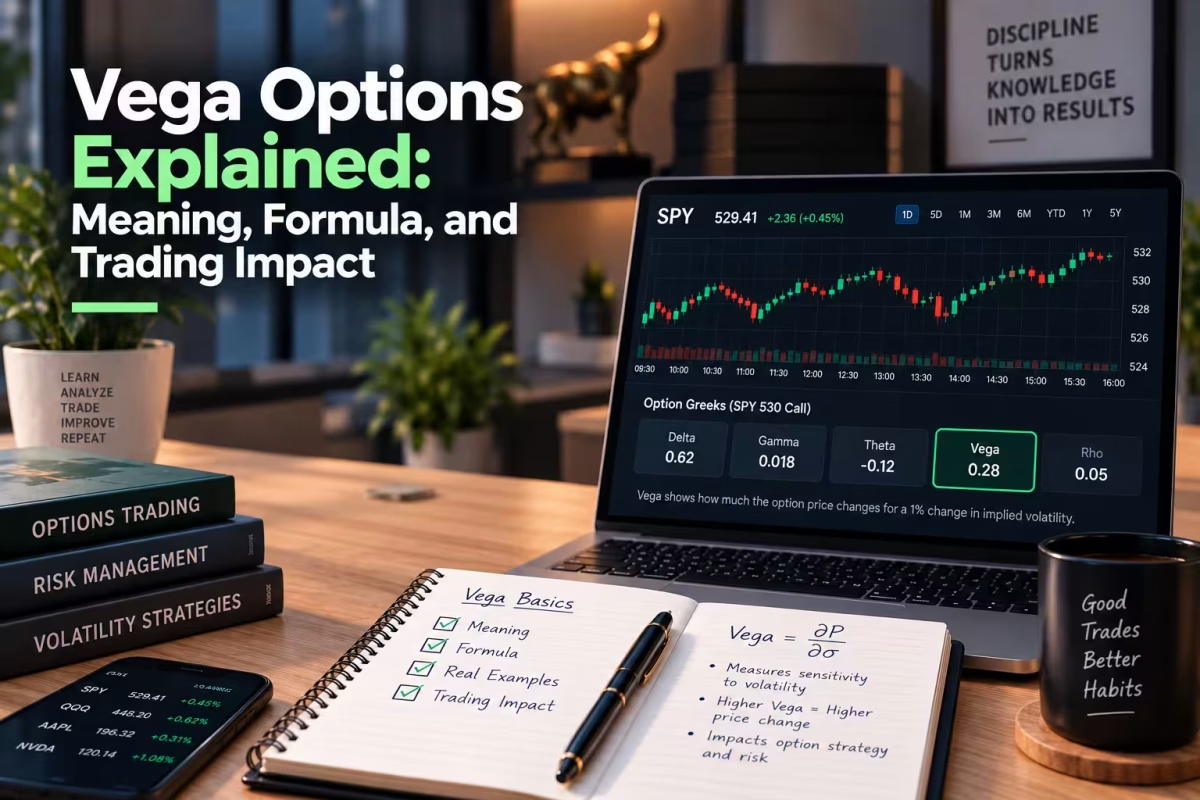
Vega options measure how sensitive an option’s premium is to shifts in implied volatility. An option’s price can change even when the underlying asset barely moves. The main driver behind that kind of move is implied volatility, the market’s forward-looking estimate of how much an asset’s price could swing. Vega is used to calculate how sensitive the option price is to a change in volatility. Understanding vega options helps traders weigh volatility risk before opening a position, rather than after.
In this article, we will explain what vega options are, their formula, practical applications, and common trading mistakes to avoid. Read on for a detailed analysis!
What is Vega in Options?
Vega is an option Greek that measures the sensitivity of an option premium to the change in implied volatility. In simple terms: Vega tells you how much an option’s price is expected to move for every 1 percentage-point change in implied volatility, all else held equal.
If Vega equals $0.60, this means that the option premium is expected to grow (decline) by approximately $0.60 if the implied volatility grew (declined) by 1 percentage point. Vega is applicable to both calls and puts, though its effect depends on the type of position opened. Vega is usually higher for at-the-money options and longer-dated options.
How Does Vega Impact Option Prices?
Implied volatility directly impacts the extrinsic value of an option. When there is an expected increase in volatility, premiums are likely to rise, while a decrease in volatility may lower premiums.
Long call and put options usually have positive Vega, meaning increased volatility is beneficial for them. Short options, on the other hand, normally have negative Vega, meaning they react negatively to increased volatility. Longer-dated options are more sensitive to volatility shifts than shorter-dated ones.
Vega does not measure volatility itself; it measures sensitivity to it.
Vega Options Formula (How to Calculate Vega)
The standard Black-Scholes model offers a mathematical approach to calculating Vega. The formula is:
Vega = S × φ(d₁) × √T
Where:
- S is the price of the underlying asset
- φ(d₁) is the standard normal probability density function at the point d₁
- T is the time remaining until the option’s maturity, in years
- d₁ is a function of the underlying asset price, strike price, volatility, interest rate, and time to expiration
This equation estimates the impact of implied volatility changes on an option’s theoretical value. Since market quotes are given in percentages, traders typically interpret Vega relative to a 1% change in implied volatility.
The precise calculation depends on the pricing model and contract specifications, so traders generally rely on the Vega figure provided by their trading platform rather than calculating it manually for every position.
Vega Options Example
An example helps clarify the concept. Assume a call option costs $12, with implied volatility of 20% and a Vega of $0.80.
If implied volatility rises from 20% to 21%, the estimated premium change would be:
$0.80 × 1 = $0.80
In this case, the option premium would move from $12 to $12.80, assuming all other factors stay constant.
Conversely, if implied volatility falls from 20% to 19%, the estimated premium would drop to $11.20.
This is an estimate, not a guarantee. The price of the underlying asset, time value, interest rates, and other Greeks can shift simultaneously, so the actual premium move will likely differ from what Vega alone suggests.
How Traders Can Use Vega
Vega gives traders a way to assess how sensitive their options position is to changes in implied volatility. It can help in choosing better contracts and building appropriate trade plans. Common uses include:
Assessing Volatility Exposure
This shows whether a position has positive or negative exposure to implied volatility. A positive-Vega position benefits from rising implied volatility, while a negative-Vega position can benefit from falling implied volatility.
Comparing Option Contracts
Traders can compare Vega across strikes and expiration dates to identify contracts with higher or lower volatility sensitivity.
Evaluating Volatility-Based Strategies
Traders anticipating changes in implied volatility can use Vega to gauge premium sensitivity — useful for volatility-focused strategies that don’t depend on price direction.
Managing Multi-Leg Positions
Vega can be summed across individual legs to evaluate the volatility exposure of a multi-leg strategy. For example, a position with +0.50 Vega combined with one at -0.30 Vega nets to approximately +0.20 Vega.
Monitoring Portfolio Risk
Tracking total portfolio Vega helps traders understand how the whole book reacts to volatility shifts. A portfolio with high positive or negative Vega can see substantial value changes when implied volatility moves.
Relationship Between Vega and Options Strategies
The table below shows the relationship between Vega and common options strategies:
| Options Strategy | Typical Vega Exposure | Impact of Rising Implied Volatility |
| Long Call | Positive | Generally beneficial |
| Long Put | Positive | Generally beneficial |
| Short Call | Negative | Generally unfavorable |
| Short Put | Negative | Generally unfavorable |
| Long Straddle | Strong Positive | Generally beneficial |
| Long Strangle | Positive | Generally beneficial |
| Short Straddle | Strong Negative | Generally unfavorable |
| Short Strangle | Negative | Generally unfavorable |
Actual Vega exposure will vary depending on strikes, expirations, and other contract characteristics.
Mistakes to Avoid When Trading Vega Options
Vega offers valuable information, but it shouldn’t be analyzed in isolation. Traders often misjudge an option’s risk by focusing on a single Greek while ignoring the broader pricing picture. Common mistakes include:
- Confusing Vega with volatility: Vega indicates sensitivity to implied volatility — it isn’t the volatility figure itself.
- Ignoring the underlying price: An option’s premium can shift from implied volatility alone, even if the underlying asset isn’t moving.
- Treating Vega as a guarantee: Vega assumes every other input stays constant, which rarely holds true in live markets.
- Overlooking portfolio-level Vega: Individual positions may show small Vega values, but combined across a portfolio, the exposure can become significant.
Delta, Gamma, Theta, implied volatility, and underlying price should all be considered alongside Vega, not in place of it.
Conclusion
Vega shows how changes in implied volatility can affect option prices. Its significance grows with time to expiration and with higher sensitivity to volatility shifts. Analyzing the Vega of each trade and strategy can help surface potential risks, but vega options analysis should be one part of a broader options analysis, not a standalone signal.
If you want to sharpen your options knowledge with actionable insights, market perspective, and educational resources, visit MySPYOptions for options trading education and market insight.
FAQs
- What is Vega in options?
Vega shows how much an option’s premium may change for every 1 percentage-point move in implied volatility, assuming other factors stay constant. The higher the Vega, the more sensitive the option is to implied volatility changes.
- Is higher Vega good for options traders?
Not always. High Vega can benefit traders holding long option positions when implied volatility rises, but it can also raise risk if implied volatility falls. It depends on the trader’s position and outlook.
- Is Vega positive for calls and puts?
Yes, Vega is positive for both long call and long put positions. Their premiums rise with increasing implied volatility and fall as implied volatility declines.
- What happens to Vega when implied volatility rises?
Premiums on long options tend to increase. However, Vega itself can shift with market conditions, moneyness, and time to expiration, so it shouldn’t be treated as a fixed number.
- Which options have the highest Vega?
At-the-money options typically carry the highest Vega. Longer-dated options also tend to have higher Vega, since there’s more time for volatility changes to affect the premium.
- What’s the difference between Vega and Delta?
Delta measures sensitivity to the underlying asset’s price movement, while Vega measures sensitivity to implied volatility changes. Together, they help traders assess different dimensions of options risk.